
I have been taking a lot of pictures of birds since getting a decent digital camera. Now that I have a decent telephoto lens for the camera, many of the pictures are good enough to share. Here are some from the Salina Carboneros, one of the salt pond areas near our house in Chiclana.
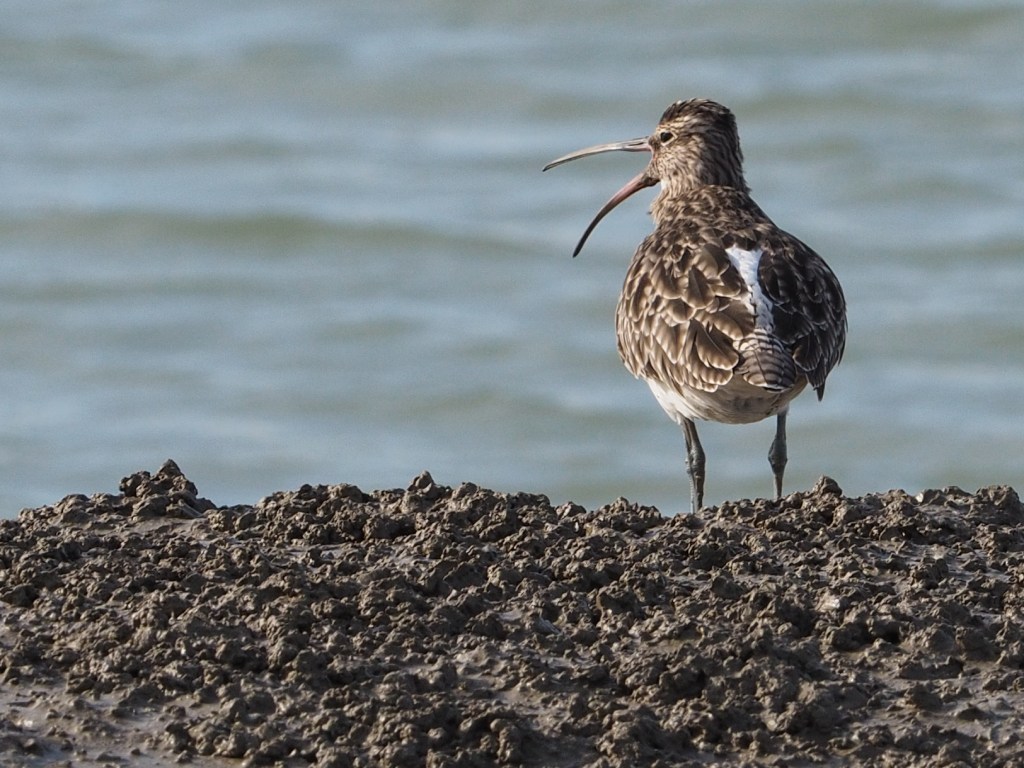
These salt ponds are a popular wintering haven for Eurasian Whimbrels, a pretty unmistakable bird. Here in Spain there is only one other species that is similar, the Eurasian Curlew, which has an even longer downturned bill, if you can imagine that.
Here is the same bird looking a little less ridiculous:
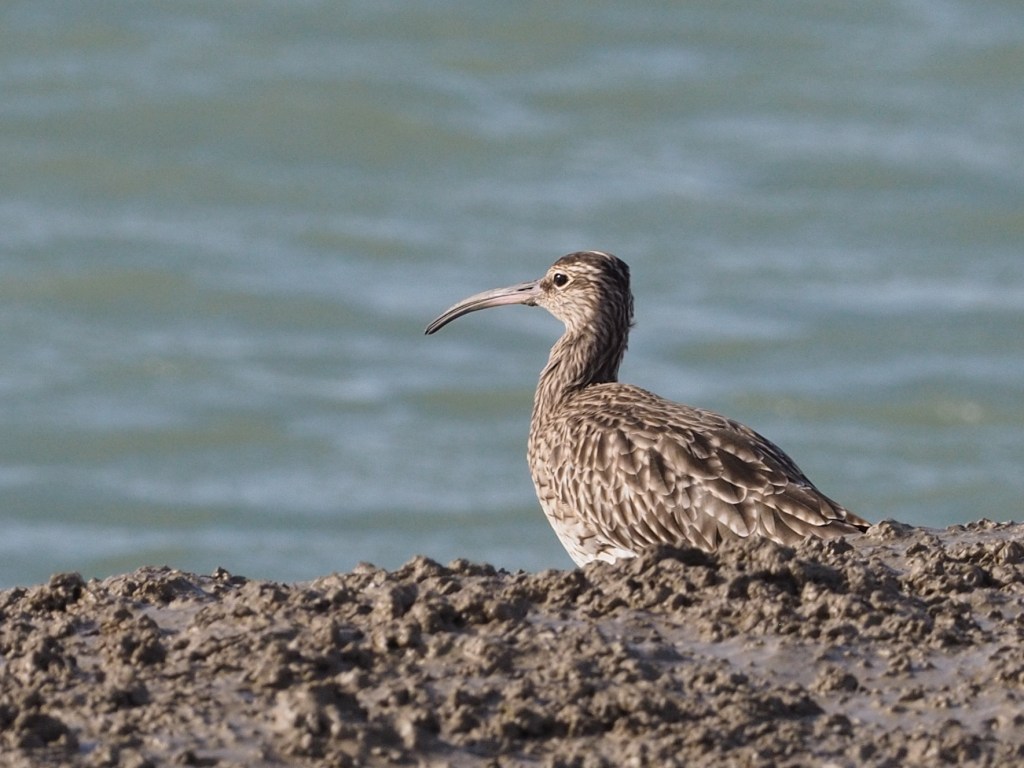
Having a good telephoto allows one to use a computer to zoom in on the details of the birds’ feathers and marvel at their beautiful patterns. Often the birds are very far away, but we can use the telephoto to capture an image that, while not good enough to share with others, gives us a clear enough view to definitively identify the bird.
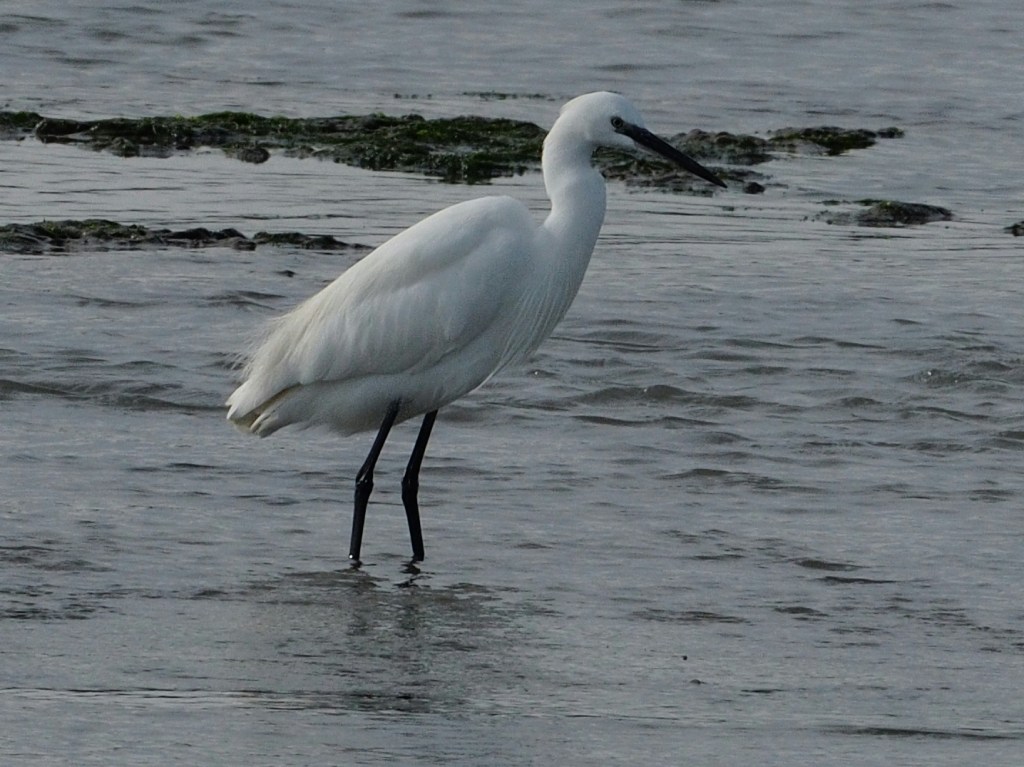
Here’s a Little Egret. It was getting dark and the photo is somewhat underexposed, but the absence of bright sunlight luckily kept the white from washing out, so one can see more of the details and shape of the bird’s body. Many of the birds we see in Europe have close cousins in America. In this case it would be the Snowy Egret.
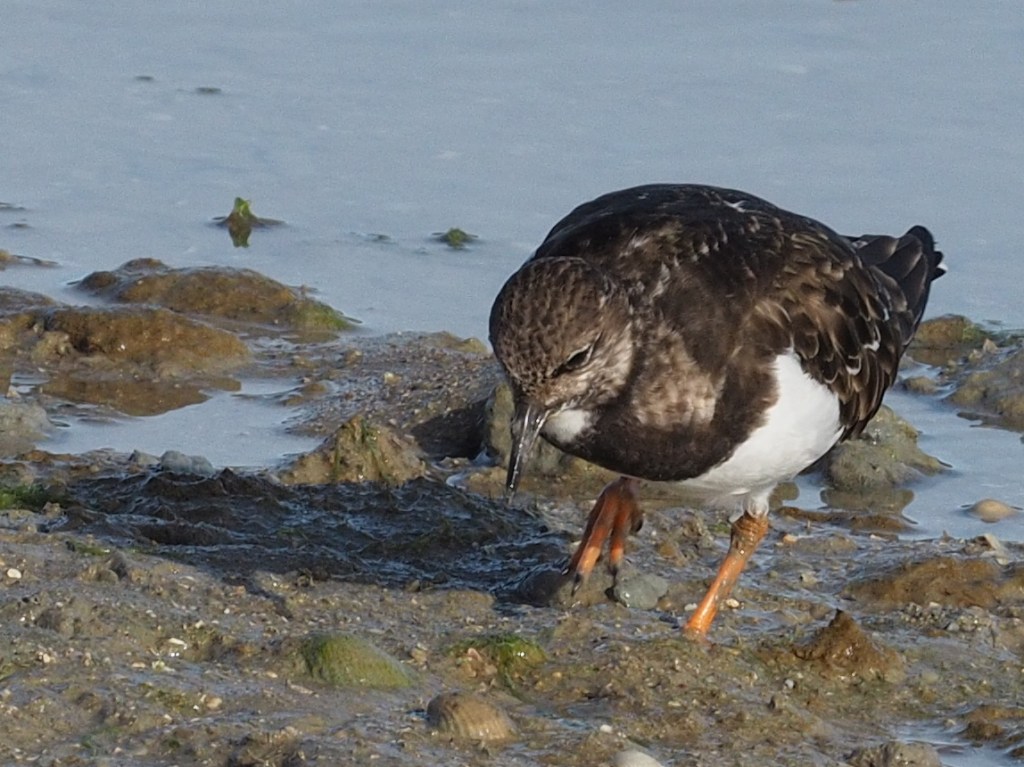
Ruddy Turnstones are found in North America as well as Europe. During the sumer the dark brown colors get spectacularly more colorful. The first turnstone I ever saw was turning stones on a gravel beach on Whitefish Bay, Lake Superior. I couldn’t believe my eyes. What a cool bird! The turnstones are not the least bit shy and are always doing something funny. Next time out I’ll take some videos of these entertaining creatures. I find when I’m out looking at birds that I get distracted by the individual birds and fail to notice the details of their surroundings. Then, when I load the pictures into the computer at home, I am often equally impressed by the patterns of soil, water and foliage. The really good nature photographers try to get as close to the ground as possible when photographing animals so that they also get the sky and full environment in their shots. Out on the salt ponds, we are usually up a yard or more above the water level on rather steeply banked levees between the ponds, so getting those low angles is tough. Wikipedia has a very interesting article on Ruddy Turnstones, and I’m sure that just scatches the surface.
 J. R. Wardell - What's Afoot
You must be logged in to post a comment.